
When someone says “libraries,” what’s the first thing you think of?
Books? Women wearing glasses with their hair in a bun? Computers? If you’ve visited one lately, you might think about children’s story times or author talks or programs on cooking or even writing your obituary.
What about bottled water for people experiencing homelessness? Maybe even a snack? Resources for local shelters and food banks?
Yup. A lot of libraries have all of the above now. We serve everyone in ways we never thought we would or needed to. But if there aren’t enough government resources for people in our community, then what do we do?
We do what we can.
However, this will take a toll on library workers. Rather, it IS taking a toll on us.
Here’s the thing. This is rough not just because of the budget cuts or lack of funding everywhere. It’s not hard just because there are some people who think folks that are unhoused “should not be allowed into the library.” Working in libraries right now can be difficult, and not just because we were NEVER trained to be social workers or to cater to everyone’s needs. You know what makes working in public libraries not so great?
For me, it’s because each and every day I see people that are mentally ill or addicted to substances or people who are living in shelters or their cars or on the streets–and they have nowhere to go. Sometimes the tiny bit of kindness each of us shows them is the absolute highlight of their day. I can’t begin to tell you how many times a day I hear, “I appreciate you.” And yet there are days when I’m not sure I can stand to watch these folks experience such hardships and pain anymore.
I am trained to recommend book titles and resources to library users. I am trained to assign call numbers and subjects to those same titles and resources. I am trained in multiple library computer systems, budgeting, supervising, customer service and creating library programs and events. But in more recent years, I also became trained in how to use fire extinguishers, an AED (Automated External Defibrillator) and how to administer Narcan. More and more librarians are taking social work classes, and if library science Master’s programs are not offering them, they shouldn’t bother teaching at all.
Because you know what? This is how libraries will be from now on. Do you see how the landscape of this country is changing? Do you really think there will be more funding to help people with housing or substance use disorder? No. Libraries are open to all and we’re proud of that fact. But we are not nurses, doctors, EMTs or therapists. We can provide a place for folks to be and some libraries are working with local organizations to provide resource fairs and snacks and even a time to see a medical professional.
But we are librarians.
Sure, people view us as superheroes (no capes!), but we are just humans and again, we are not trained to help those we are now tasked to help.
I have witnessed several overdoses in the past few years, thankfully no deaths, but that’s because of the heroic measures my colleagues took administrating Narcan. I have listened to young men cry on the phone because they didn’t have a place to stay the night and they were desperately calling shelters and people they knew. I’ve dug through my purse to try and find a granola bar for someone whom I knew really needed the calories, but to find nothing (which has not happened since because I won’t let it). Like probably any other librarian or public facing worker, I’ve been yelled at and called some horrific names. I’ve listened to some folks tell me stories that I hoped were not true, and others I just couldn’t understand because their words didn’t make sense but might have made sense to them. And I’ve stood at the front desk while someone used the phone, and I could feel whatever horrible trauma she faced coming off of her in waves. I wanted to run from her, even though she wasn’t doing anything wrong. I forced myself to stay still, treat her with kindness, although if I could have bolted I would have.
Like most people working in these situation, I try to shed everything I encounter before I get home at night. I take walks every day, I read and listen to audio books for a few hours daily, I try to eat well and lift weights a few days a week. I go to therapy every other week. But…I go home to a husband who is slowly dying from congestive heart failure. I go home sometimes to find he’s barely moved all day. I go home and wonder if this will be the day he doesn’t wake up, but hope that if it is that day, that I’M the one that finds him and not our son.
Is it any wonder, then, that I finally broke down? That I finally snapped at a colleague and stopped talking all together? That I found I could not physically smile for an entire day? That I’m so angry at the government, voters, my husband, or the asshole that said people that are unhoused shouldn’t be outside the library on a sunny day or inside the library on a cold day? Is it any fucking wonder that I want to burn down the world?
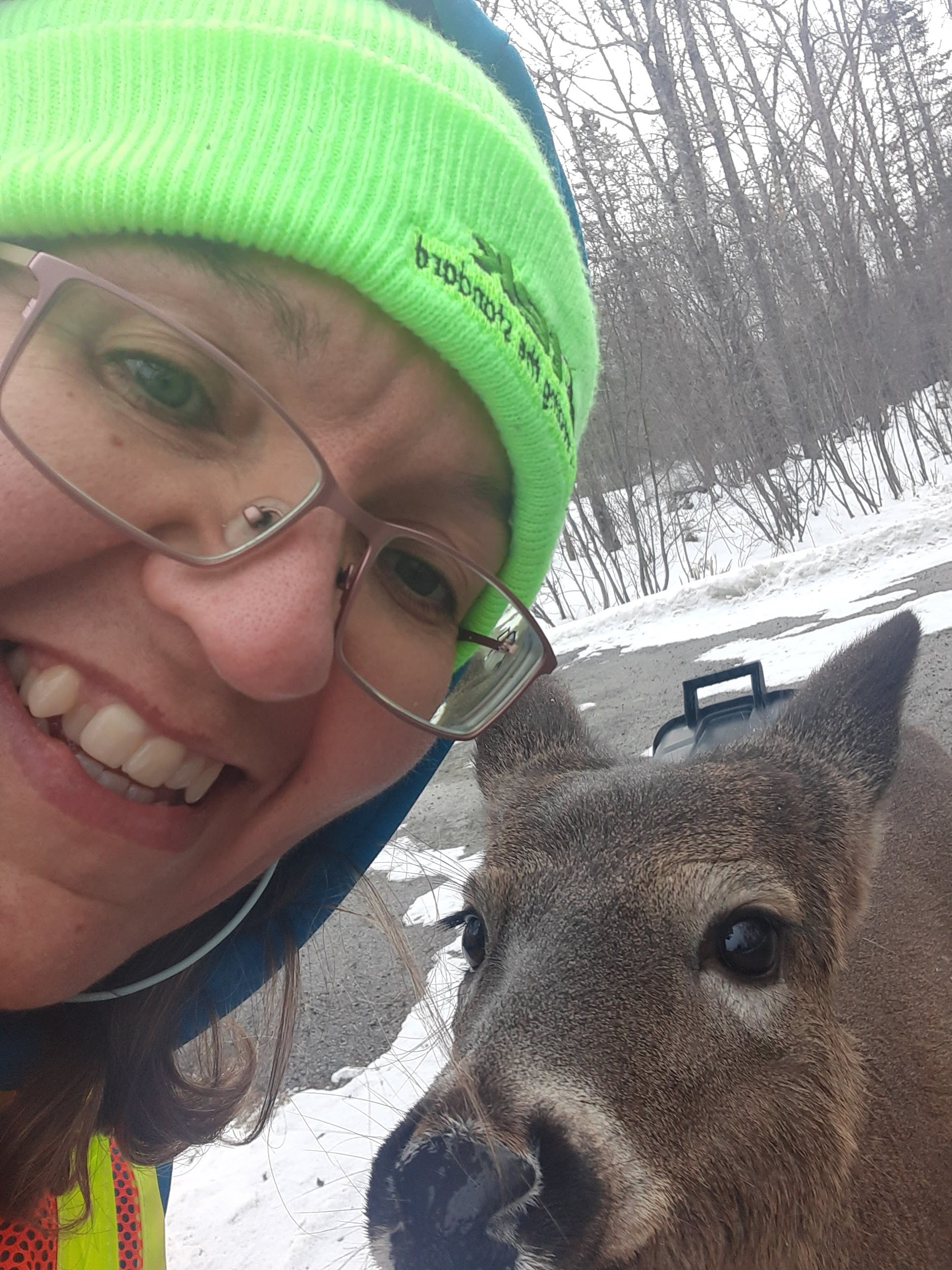
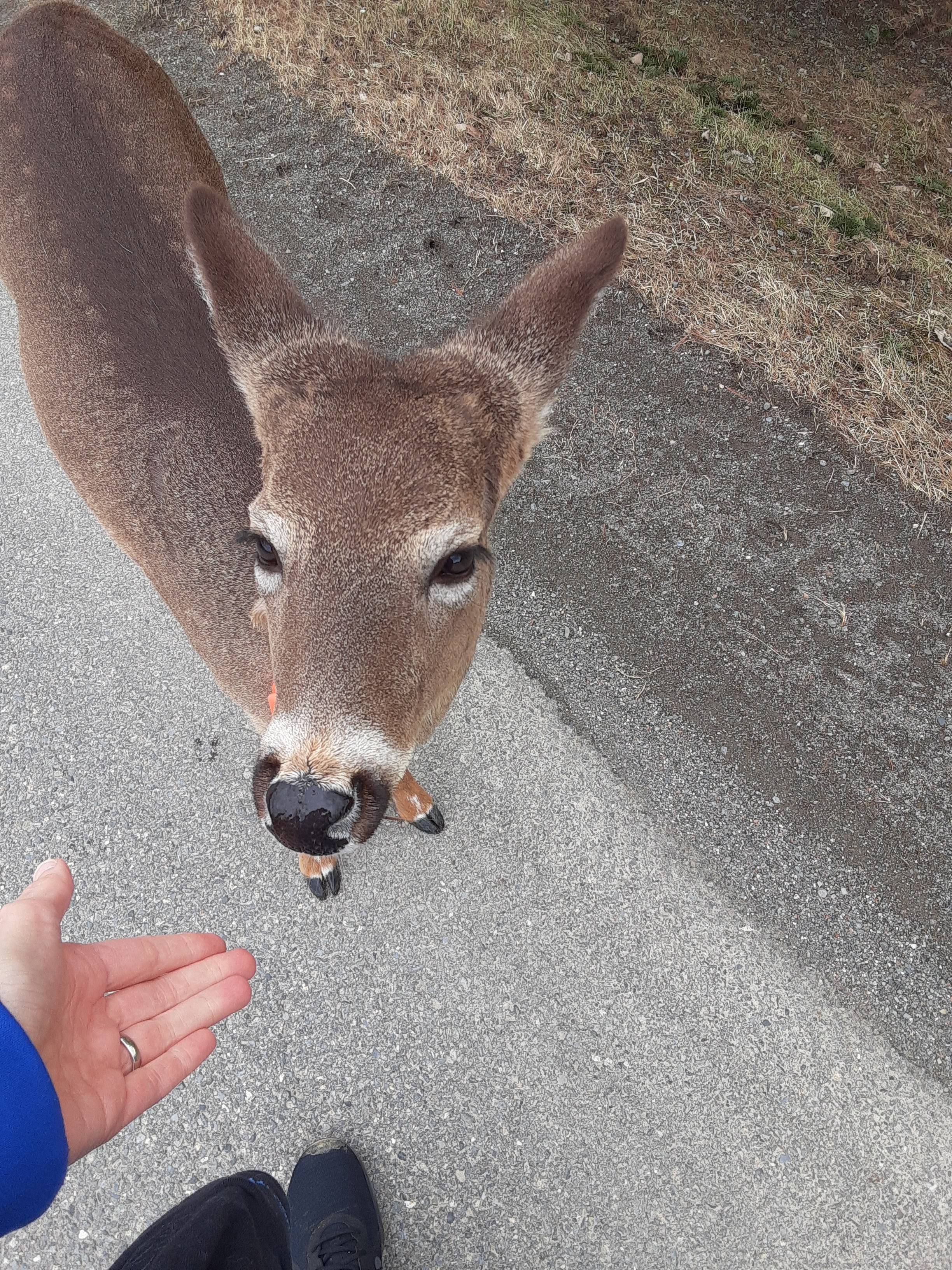
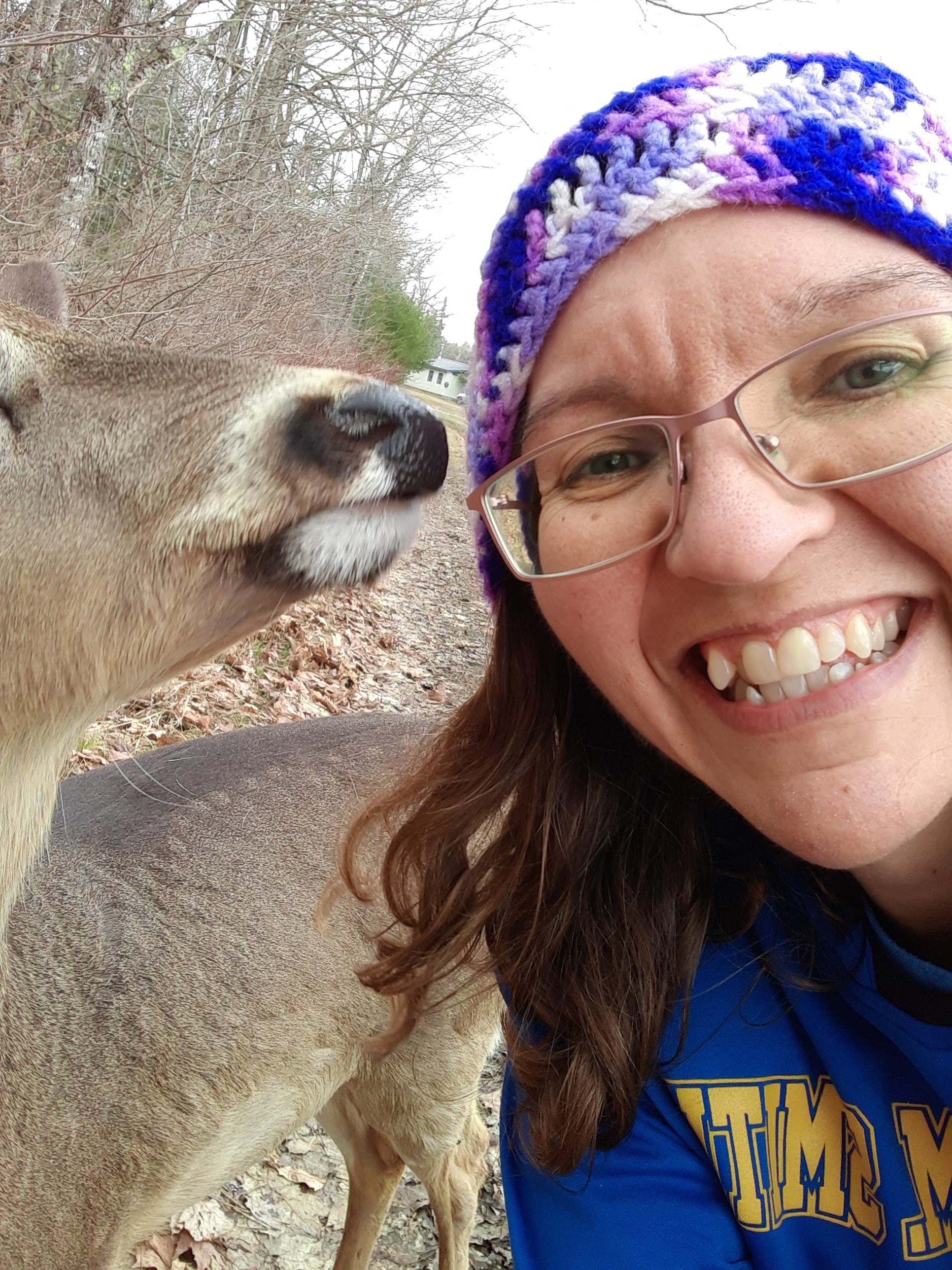
You know what though? Tonight, while taking one of those walks I mentioned, I saw a white-tailed deer hopping and frolicking in a field, on its way to the woods. It made me gasp, stop in my tracks, and smile big and wide.
So…I might not want to burn everything down quite yet.
(Below you’ll see my friend and running partner, Bam-Bam. These photos were from 2021. RIP, my friend.)
Now get out there, get a library card and visit your local library. And no, you probably won’t see someone use drugs or freak out, so don’t get your panties in a bunch, Aunt Eileen. Christ! You might see a person without a home and that sucks—for them. Stop being a dickhead and show some compassion and kindness, alright?
Hugs, y’all.
 See Holly Run
I’ve seen “questionable” patrons hanging outside and inside the Cincinnati Public Library, but didn’t think the homeless and drug problems impacted libraries that much. A real eye-opener.
I’m truly glad I could educate you on this, Pete. Really. I have always said (as do many other librarians) that a good library reflects your community, and that includes any of the challenges your community may be facing. When cities “clean up” encampments created by folks that are unhoused, yet the cities don’t create more shelters, then where do they expect these folks to go? And if there’s no money to help people with mental illness or substance use, then those folks will end up at the one place anyone can go into without opening their wallet.
I think you live in Bangor? The city should try following Houston, which has become a model for the nation re solving homelessness: https://www.cbsnews.com/news/how-houston-successfully-reduced-homelessness/
Pingback: Emotional labor in libraries – The OW Factor