
I took this past week off from work and did a deep dive into death work and what that might mean for me. I start an end of life doula course next month through the University of Vermont and my hope is that I’ll be able to retire from librarianship in 8 years and have a small business of helping people arrange for their death.
What does that mean? I’m not entirely sure. I have many ideas, including having a small home on my property where people can come to die. (Although we have the Death with Dignity law now in Maine–a person is allowed to receive a medical aid in dying, many folks who live in any kind of long-term care facility are not being allowed to die this way. Wouldn’t it be wonderful to provide a space folks can rent so they can die the way they wish?) I would like to be able to show people the options they have for funerals or burials. I’d love to sit with folks as they fill out their advance healthcare directives or living wills and answer questions they might have. I want to be able to show people that if they have a terminal illness, they can die the way they want to. Usually. And maybe even blend bibliotherapy with end of life care or grief or both.
So how do I begin? Well, I, of course, read. I’m already facilitating a “Grieving Through Reading” group at my workplace and for that group I’m always reading new memoirs or books on how to die well or novels about grief. I’ve honestly been doing this since before my brother died in 2017. Ten years ago, with the help of my then boss, Lyn, I wrote a grant to start a five-month library program with book discussions and presentations about the end of life. After Phil and my parents died, I started a new library program called “Death and Donuts” where we had speakers on a variety of topics including hospice, spirituality, grief and advance healthcare directives. I was really doing it more for me…or maybe for the me I was before they died. I wish I had known so much more before they died.
But now I want to DO more.
Many people think talking about death is morbid. But why? It’s the one thing every single person on this planet has in common. We will all die. If you talk about your own death or write a will, this does not mean you’re manifesting death. You get that, right? If you think more about the fact that there is an END to your life, then doesn’t that make you want to live more fully or live your best life, whatever that might mean to you?
I know that most folks find death frightening because it’s the unknown. My father, who believed in God and heaven, was very scared the day before he died. He had really turned his life around during the last 30 years of his life. He made amends for all the shit he had done while drinking (and not drinking). He had been an avid churchgoer and a true believer, but seeing him scared also scared me. Thankfully, on the day he died, Dad saw some of his loved ones–people that had already died–and seemed to find some peace and joy in that. I can only hope that they helped him get to where he needed to be.
Is it scary to think about my own death? Absolutely. Yet I think I’m more scared for my son. I want him to grow older with as much support as I can give him, whether that be emotional or financial support. And losing your mom at any age is a mind fuck. So I’d rather that not happen for a while, but I also know that he’s going to be such a fantastic man, even if I’m not around. Hell, he already is.
Funny enough, the day my week off began, my little family and I had to have a chat about how my son wanted to be notified when his father dies. This discussion began with me calling my son on a Friday evening. He was at his boyfriend’s house and I had a question for him. After we got off the phone, he texted me to say he legitimately thought I was calling to say his father was dead.
Well, shit.
Later, our family sat down and talked about how our son wanted to be notified if he’s away at college and his father dies. “Text me,” he said. Of course, I was appalled. He went on to say that he wants to be texted then immediately called, because then he’d be able to see on his screen that text before we say anything to one another. He’d rather read it then hear it?
I’m…mulling this over. What would I say then? “Pop is dead” or “I have some bad news” or a skull emoji?
But the best part of that conversation was my husband saying, “Boy, how many families have talks like this?” Our son said it was probably more than we thought, but I said, “I wish every family would have conversations like this.”
For the rest of my week off, I listened to death doula podcasts, co-facilitated my first bereavement group, visited my hospice patient/friend, gathered more titles of both novels and non-fiction books related to end of life, attended a regular meeting of the Funeral Consumer Alliance board I’m a member of, and visited the Rest in Peace Museum in Island Falls.
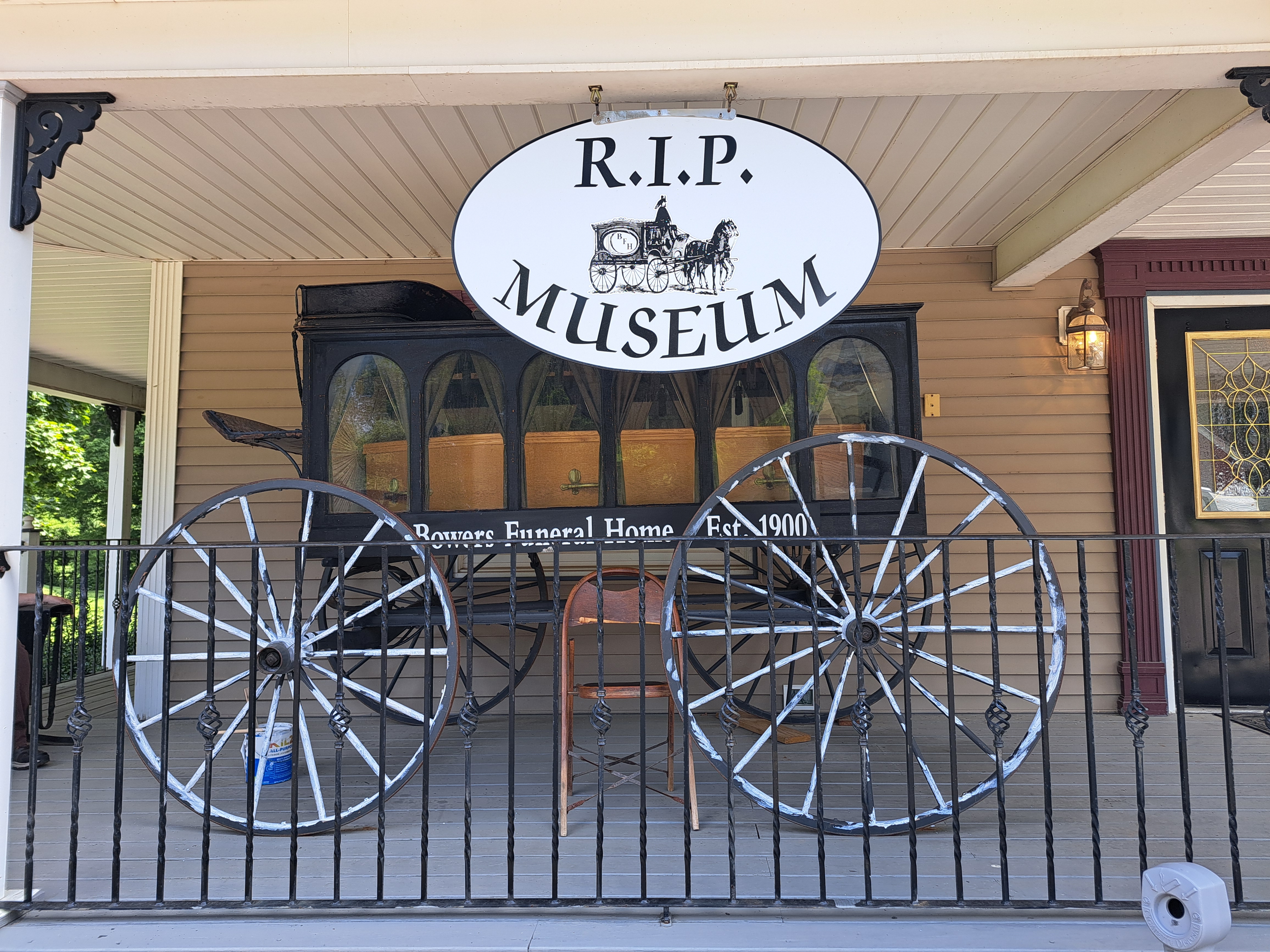
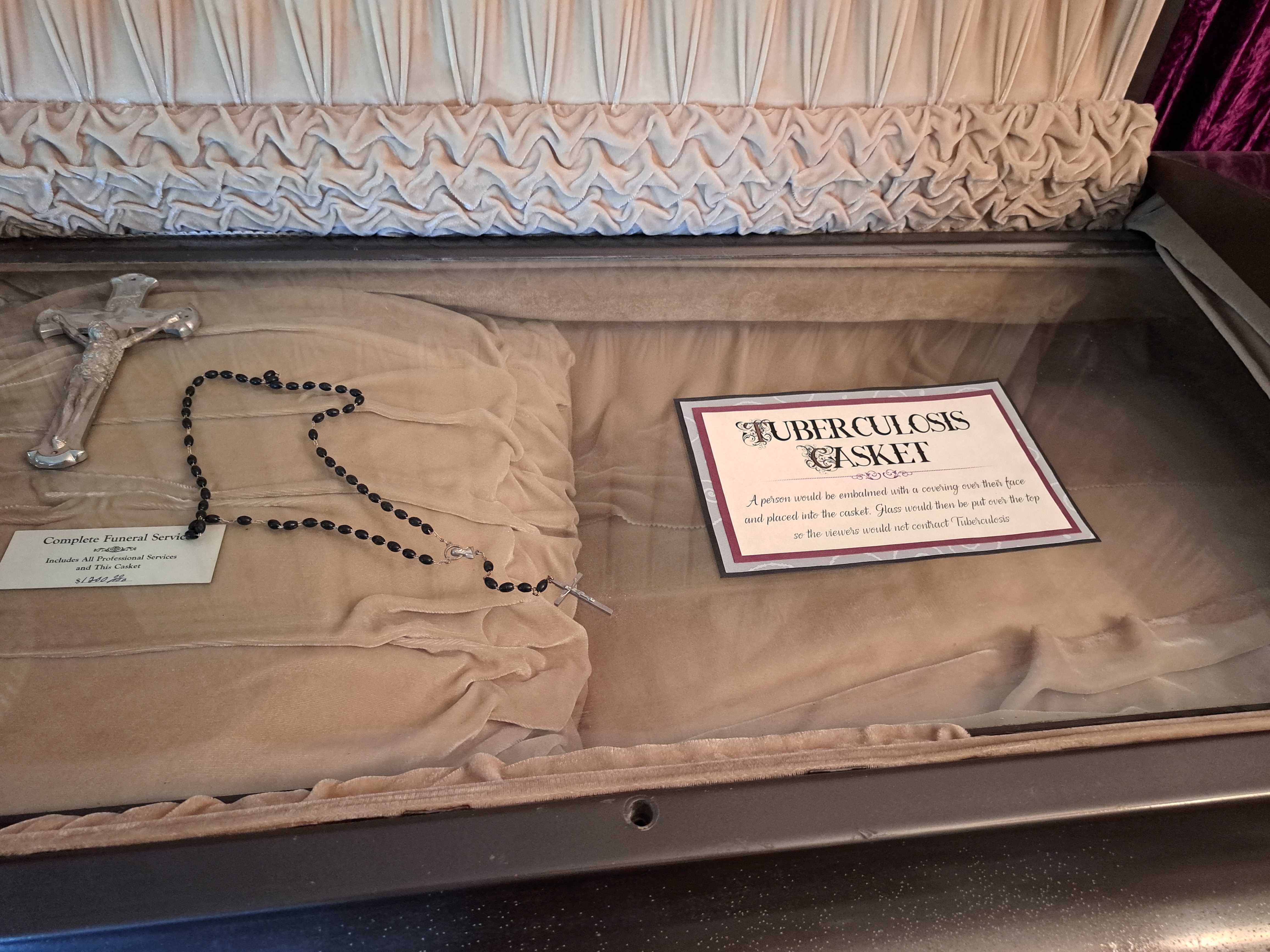
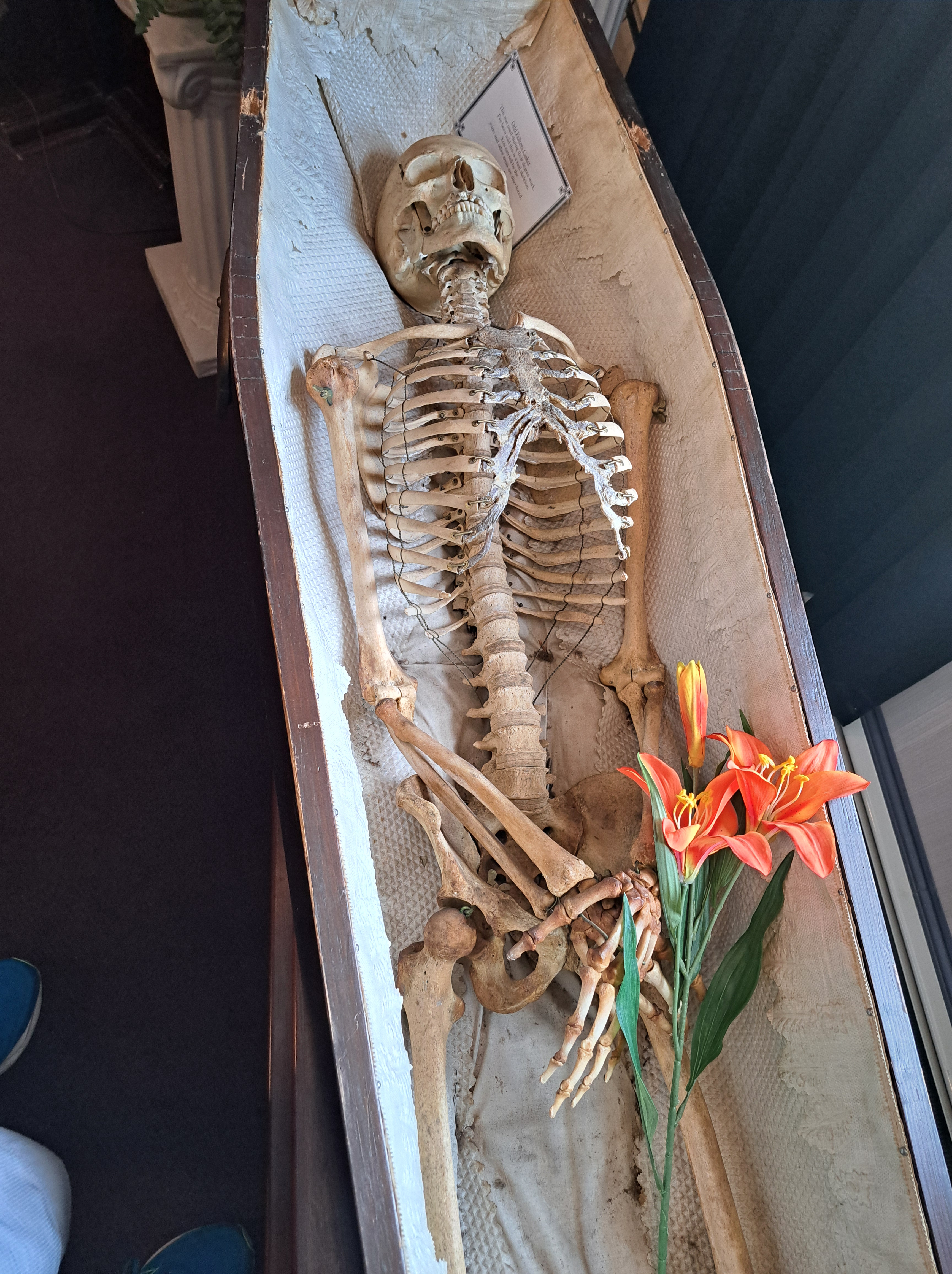
The day I visited this museum was the 8th anniversary of my brother’s death. Typically this is not a good day for me. But I started the day in a really good mood. I was driving 90 minutes to experience something new, which is what I try to do every July 23rd. My brother is no longer able to experience life on this plane, so I try to live it for him. And I know he’d love the Rest in Peace Museum with its tuberculosis caskets, real skeletons and the wide variety of embalming tools from the early 20th century.
Once I left the museum, however, my mood started to decline. The closer I got to home, the worse I felt. I had a good plan for the day, which included sushi with my husband and son and then “family time” due to my son’s request. He wanted us to watch a movie together or play a game and just make sure we spent the entire evening together. This all sounded great and honestly, it was. I just had a few hours where I was feeling how big that hole in my soul or psyche is. The loss of my brother will always leave shadows throughout my life until I, too, leave this planet.
But until that day is here, I will celebrate and talk about my big brother, Phil. This week I was fortunate enough to introduce my son to one of Phil’s best friends, Pat, who shared more stories about my brother that I didn’t know or had forgotten. It was such a gift to all of us.
So, my friends, get out that glass and toast your family and friends that have died. Say their names, tell their stories and then make a plan for your own death. Don’t let your family try to figure out what you want after you’re already dead. And if you’re not sure where to start, shoot me a message.
Hugs to you all. ❤



 See Holly Run